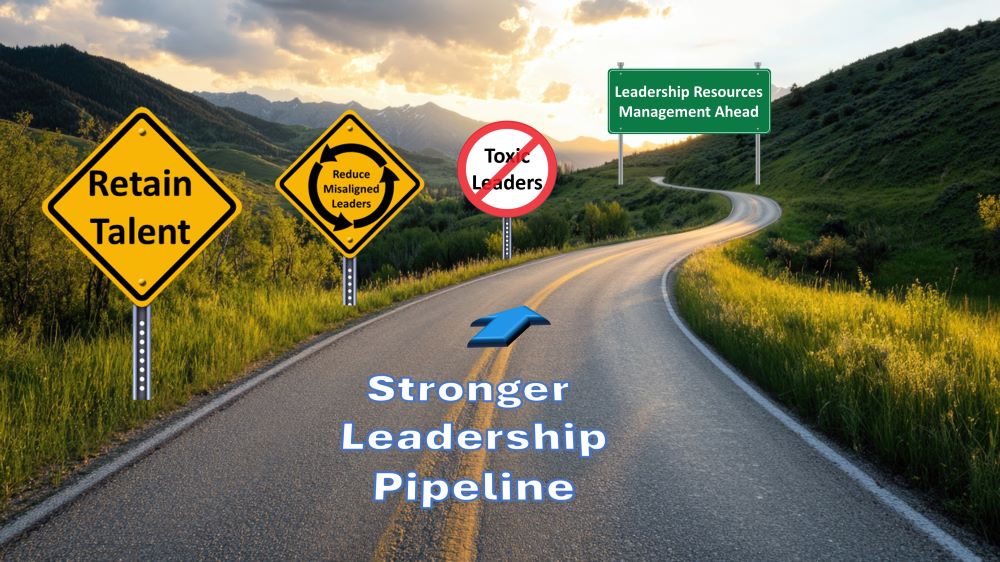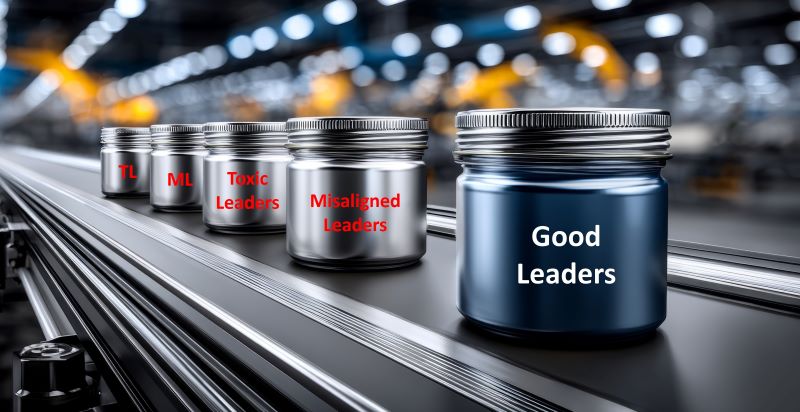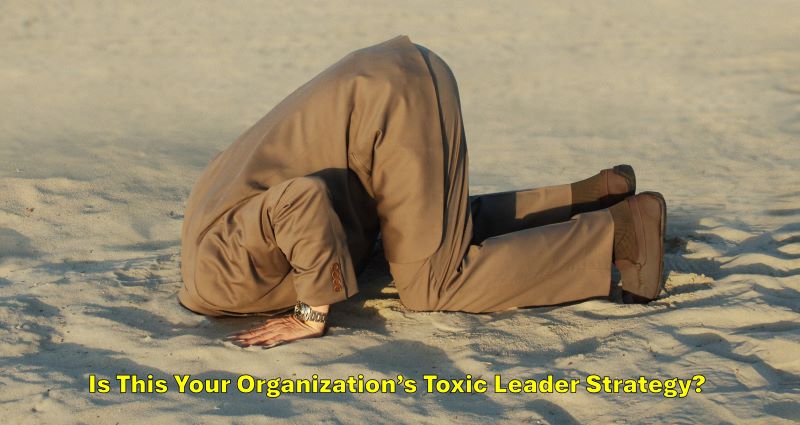

Many organizations create toxic and misaligned leader problems without realizing it. Sometimes the problem is intentional, but more often it grows because the organization creates the conditions that allow it to persist.
Toxic Leaders
Toxic leaders often become toxic because they never learned effective leadership behaviors or they learned the wrong ones from a mentor, peer, or past experience. In some cases, their behavior reflects who they are as individuals and becomes more visible once they are given authority.
Organizations often create toxic leaders by:
- Promoting someone who deserves the role but never giving them leadership training.
- Rewarding results without considering how those results were achieved.
- Allowing a toxic culture to shape how new leaders behave.
When leaders are promoted without support, they often rely on whatever example they have seen before. If that example was unhealthy, the behavior often becomes unhealthy too.
Leaders are often rewarded solely on what was accomplished without consideration for how the results were achieved. These “rainmakers” often become toxic leaders, as a top sales performer, a respected physician, brilliant scientist or strong marketer. They appear successful on the surface, but behind the scenes, their peers and direct reports are experiencing something completely different.
Organizations also contribute to toxic leadership by pretending the problem does not exist. In reality, warning signs usually show up early through low morale, turnover, and team dysfunction.
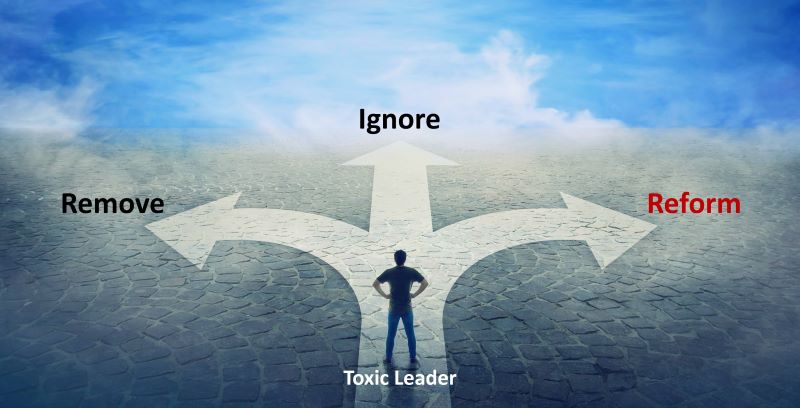
Toxic leaders are often good at managing up, which makes them harder to identify. Senior leaders need to listen carefully to peers and direct reports, not just to the leader’s own version of events. In some cases, coaching can help. In others, the best solution is to move the person out of the role.
Misaligned Leaders
Misaligned leaders are people placed in leadership roles that do not match their strengths, readiness, or the situation they are expected to lead. A person may be highly capable in a functional role and still struggle as a leader.
Organizations often create misaligned leaders by:
- Promoting people based only on technical expertise or individual success.
- Ignoring whether the person is truly ready to lead others.
- Failing to account for changes in the environment, such as a downturn, regulatory pressure, or disengaged employees.
Leadership fit is not just about the person. It is also about the context. A leader may be effective in one environment and ineffective in another.
Organizations make the problem worse when they ignore the signs of misalignment. Weak morale, lower productivity, and avoidable turnover are common outcomes.
Losing High-Value Leaders
When toxic and misaligned leaders stay in place, organizations often lose their best people. High-value leaders bring fresh thinking, creativity, and strong execution, and they are usually in high demand.
When those people leave, the damage goes beyond replacement costs. Strategic work slows down, customer confidence can weaken, and innovation often suffers.
Financial Impact
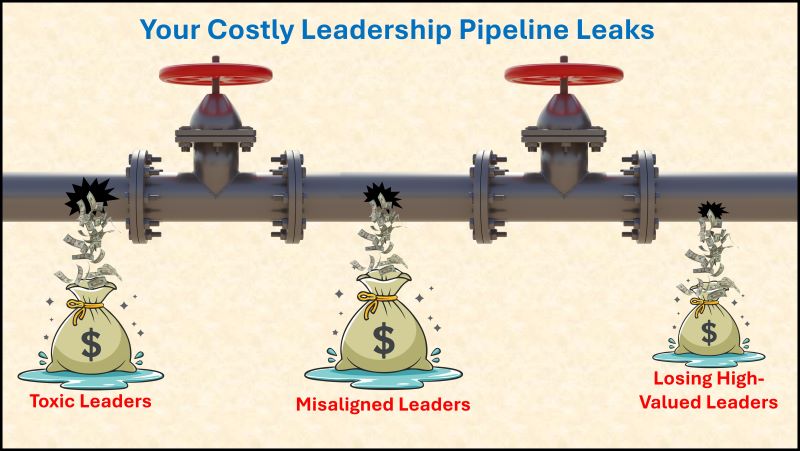
This problem is also expensive. For a 1,000-person organization with 20% of employees in leadership roles, the estimated financial impact is around $9.1M. Most of that, $7.0M, is from the impact of toxic leaders on employee disengagement, lost productivity and higher turnover. Misalignment adds another $1.5M million and just replacing high-valued leaders adds another $600K, which doesn’t account for the significant contributions high-valued leaders make to an organization. (Calculate the financial impact for your organization using our free Financial Impact Calculator)
The good news is that organizations can do something about it. They can identify toxic leaders, coach the ones who are willing to change, move others out of roles where they are causing damage, and use better tools to assess leadership fit.
Once those issues are addressed, organizations can focus on keeping their high-value leaders engaged and performing at a high level.
Schedule a 30-minute executive briefing to learn how a pilot study can help your organization identify costly toxic and misaligned leaders.