

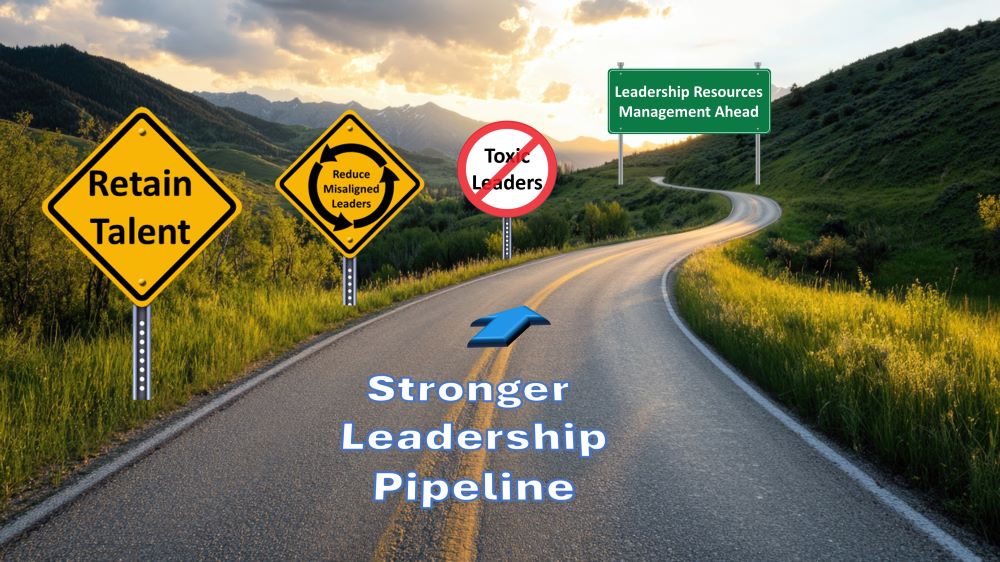
Leadership management may be one of the most important strategic priorities an organization can undertake. It goes beyond leadership development, which focuses on helping individuals become better leaders, whereas leadership management focuses on how an organization identifies, deploys, and retains leadership talent more effectively.
When leadership is managed with the same discipline as other high-value assets, such as intellectual property, data or brand equity, it becomes a true business advantage. That is the idea behind Leadership Resources Management, or LRM, as quality leadership enriches all the other assets.
LRM is a data-informed approach to identifying, developing, and deploying leadership talent so organizations can better align people with business goals and improve performance.
A strong LRM strategy helps organizations:
- Retain and manage top leadership talent. (high-valued leaders)
- Reduce misalignment by placing the right leaders in the right roles. (misaligned leaders)
- Reveal dysfunctional leadership before it damages performance and drives avoidable turnover. (toxic leaders)
When leadership is not managed strategically, pipeline leaks begin to form.
As a data-informed solution, LRM raises three numbers organizations should not ignore: prevalence, financial impact, and corrective action ROI.
PREVALENCE
Leadership pipeline leaks are more common than many organizations realize. If you are a C-suite executive, they likely exist somewhere across your organization. If you are a vice president or director, they may already be affecting your team.
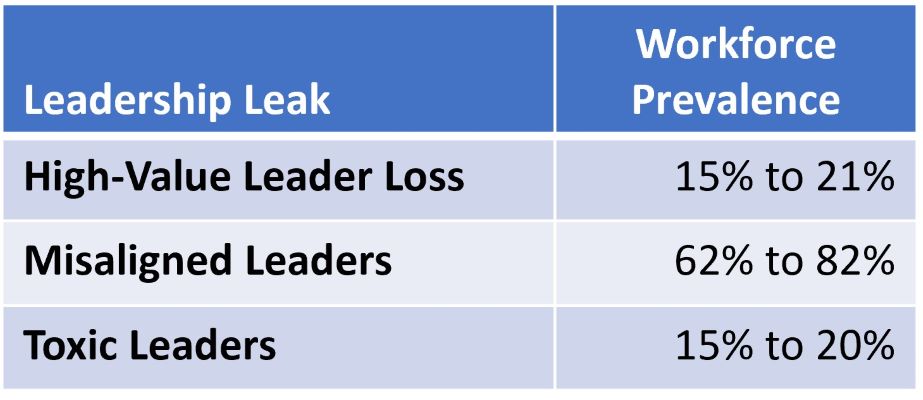
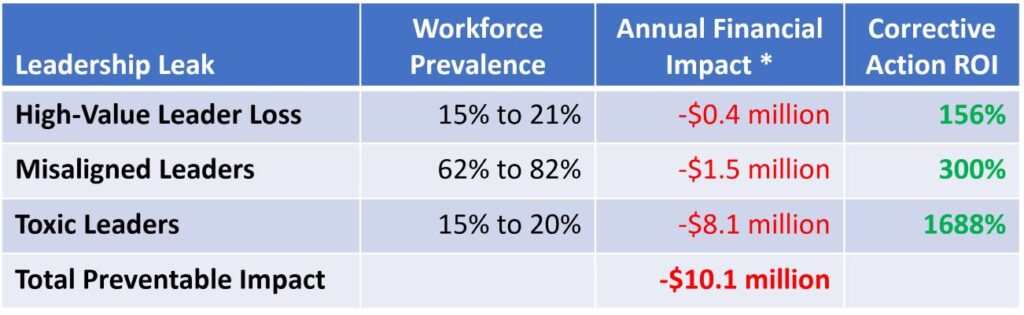
High-value leaders typically make up 15% to 21% of the workforce. They are not only valuable, they are also highly sought after. Losing one affects far more than replacement cost. It can slow strategic initiatives, weaken customer confidence, and reduce innovation.
Misaligned leaders typically make up 62% to 82% of the workforce. This usually happens when people are promoted or assigned to roles that do not fit their strengths, readiness, or leadership style. The result is lower morale, weaker productivity, and avoidable turnover.
Toxic leaders typically make up 15% to 20% of the workforce. They often look successful on the surface, which makes them hard to spot. They may be top sales performers, respected physicians, strong marketers, brilliant scientists, or financial stars. But behind the scenes, their teams often experience a very different reality. Toxic leadership drives disengagement, lost productivity, and higher turnover.
Ironically, high-valued leaders often leave because they no longer want to work for misaligned or toxic leaders.
FINANCIAL IMPACT
Research suggests replacing a high-value leader can cost 0.5 to 2.0 times their annual salary. Misaligned leaders can cost about $12,000 per leader per year. Toxic leaders can cost 3 to 5 times their annual salary.
Each of these leadership leaks carries a significant financial cost. In many organizations, that cost is underestimated or ignored.
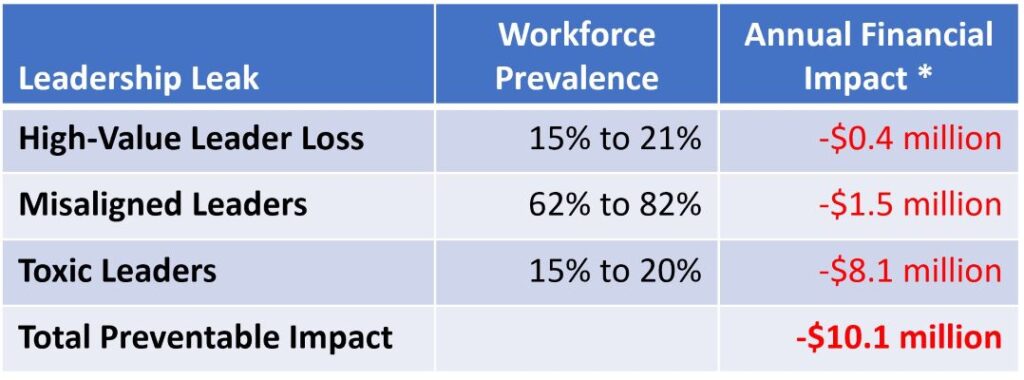
For a 1,000-person organization with 20% of employees in leadership roles and an average salary of $90,000, even conservative estimates add up quickly.
CORRECTIVE ACTION ROI
The good news is that these problems can be addressed, and the return can be significant.
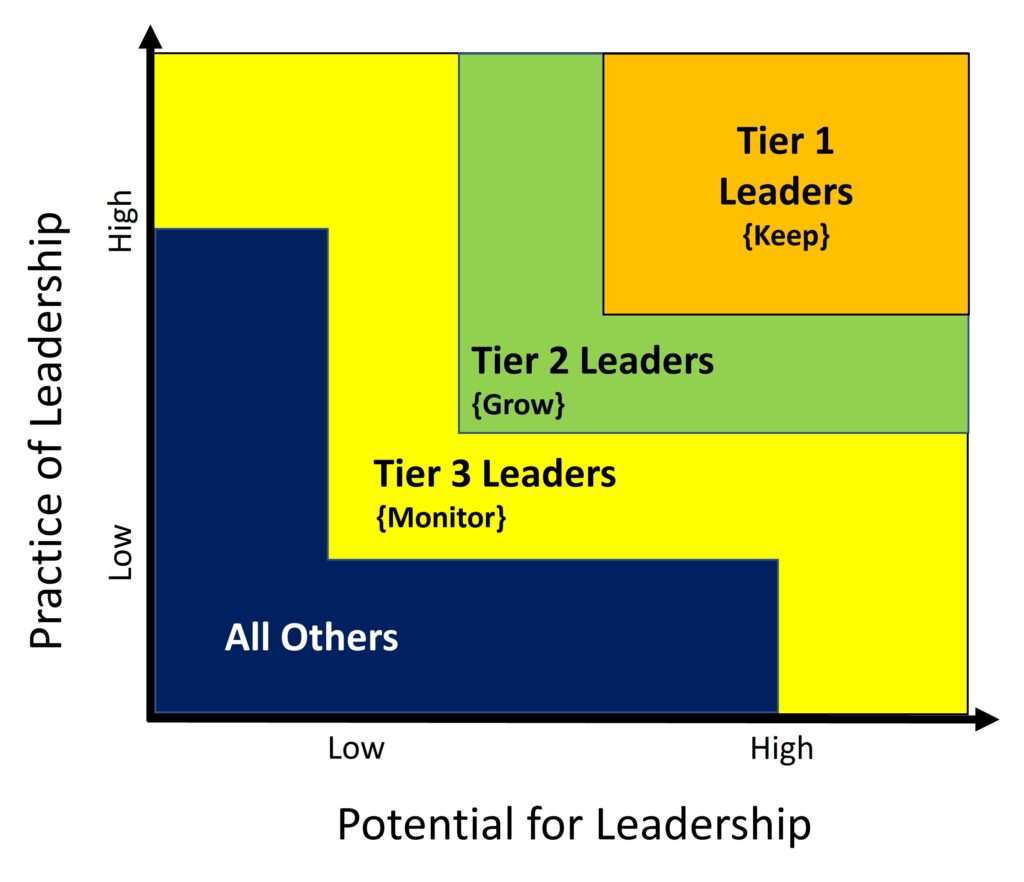
High-value leaders can be identified in multiple ways. One method is to use the toxic and misaligned leader analysis to build the leadership tiers. Another is to assess leaders independently of their team or role and compare the results to population averages. Once the leadership tiers are determined, strategies can be implemented to keep valuable leaders, grow the next level of leaders and monitor the next level of leaders.
To reduce misalignment, a leader’s behavioral assessment can be compared with an analysis of the role they hold or want to hold. That comparison shows where the leader is well matched and where gaps may exist. When a leader is determined to be misaligned, additional training can be provided or they could be moved to a position where they would be a better fit.
To identify toxic leadership, a standard 360 review is often not enough. A better approach is an anonymous, multi-rater assessment that includes peers, supervisors, and direct reports. It should produce quantitative, benchmarkable data instead of relying on subjective comments alone. A toxic pattern becomes clearer when the leader’s self-assessment does not align with team feedback. Once identified, it must be determined if the toxic leader can be reformed through focused coaching or needs to be removed.
These analyses often generate triple-digit returns on investment. In the 1,000-person example, ROI could range from 156% to 1688%. Few organizational investments offer that kind of return.
Having leadership pipeline leaks is not an indictment of an organization. Every organization has them. The real issue is failing to act on them.
If the cost of addressing these problems seems high, consider the cost of doing nothing.
Contact us to schedule a 30-minute executive briefing and explore how a pilot study can help close the leadership pipeline leaks costing your organization time, talent, and money.